
No products in the cart.

- Home/
- Buy Clomid at Low Price Online in the United States
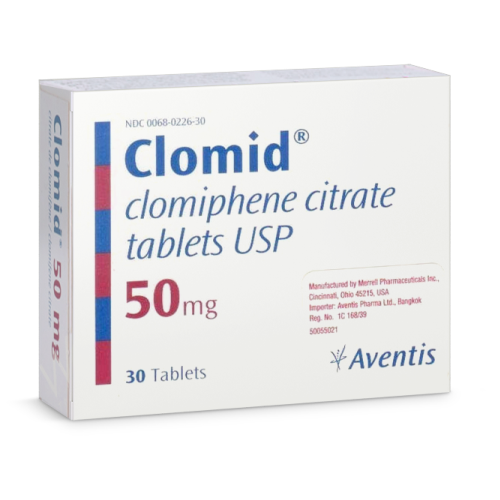
Clomid is a prescription medication used to help people in the United States with certain types of female infertility, especially when ovulation is the barrier to pregnancy. The most important thing to know: Clomid can dramatically improve ovulation rates, but its real-world success depends on careful timing, individualized dosing, and a clear understanding of how it fits into the broader infertility treatment journey.
Clomid in the Moment of Decision: A Scene from Real Life
Picture this: a Tuesday morning, exam room briskly chilled, a couple sitting across from their reproductive endocrinologist. Weeks of temperature charting, months of hope and disappointment, and now a single question hangs in the air. “Should we try Clomid?” The doctor doesn’t answer right away. Instead, they open a folder of test results—ovulation tracking, hormone panels, an ultrasound. There’s something deeply personal about this moment: the intersection of science, timing, insurance paperwork, and the raw, unfiltered desire for a child.
“What you’re looking for isn’t a wonder drug. You’re looking for a first real shot at ovulation—one we can actually influence.”
For most people, Clomid represents the transition from trying on their own to starting medical treatment. It’s not the beginning of the journey, but it is often the first turning point. And while the numbers are encouraging—nearly 60-80% of women with ovulatory infertility will ovulate while taking Clomid—the actual path to pregnancy is more nuanced. Expectations, emotions, and the details of American healthcare all shape how Clomid fits into your life.
Stat: Most people who respond to Clomid will ovulate by the third cycle, but the cumulative chance of pregnancy per cycle is about 10-15%—not a guarantee, but a real step forward.
Does Clomid Fit Your Infertility Story?
Before anything else, the question is not just “What is Clomid?” but “Is Clomid the right move for you—right now, in your story?” For some, it is the obvious first-line choice. For others, it’s the wrong tool entirely.
- Your diagnosis: Clomid is recommended for ovulatory dysfunction—meaning you do not ovulate regularly—but not for all types of infertility. If your tubes are blocked, your partner’s sperm count is very low, or you have diminished ovarian reserve, Clomid is unlikely to help. This is why a thorough workup comes first.
- Timing and age: In the US, Clomid is most effective for women under 35 with unexplained or anovulatory infertility. Over 35, or after several failed cycles, your doctor will often recommend moving to more aggressive treatments quickly—time becomes the most precious resource.
- Your comfort with monitoring: Clomid cycles require tracking—sometimes with bloodwork, sometimes with ultrasound. Some clinics monitor more closely than others, and this can influence both safety and success.
Clinical Tip: Ask your doctor: “Do my test results show that I’m a good candidate for Clomid, or is there another reason for my difficulty getting pregnant?”
Clomid is not for everyone, but when it is the right fit, it often offers the best intersection of effectiveness, convenience, and cost for a first attempt at medical treatment in the United States.
Inside the Cycle: How Clomid Works in Real Bodies
Clomid’s story is not about hormones in a vacuum—it’s about how those hormones interact with you. Clomiphene, the active ingredient in Clomid, is a selective estrogen receptor modulator. It tricks your body into thinking there isn’t enough estrogen. The result? The pituitary gland releases more FSH and LH, jump-starting ovulation. But the way this actually plays out—cycle by cycle—depends on your hormonal balance, your ovarian reserve, and even your body weight.
- Estrogen “blockade”
- Clomiphene binds to estrogen receptors in the brain, leading to an increase in FSH (follicle-stimulating hormone) and LH (luteinizing hormone).
- Ovulation induction
- Most women ovulate about 5-10 days after the last Clomid pill in a cycle—timing that shapes when to have intercourse or schedule insemination.
- Not just “more eggs”
- Clomid typically produces a single mature egg, although twins are more common (about 7-10% of pregnancies), and higher-order multiples are rare.
What this means for you: The mechanism is elegant, but the outcome is not always predictable. Some cycles, you may not ovulate even with the correct dose. Sometimes, endometrial lining can thin, or cervical mucus may become less “sperm-friendly.” That’s why real-world monitoring, not just textbook cycles, is essential.
Important Note: Clomid’s effects on ovulation are dose-dependent, but increasing the dose does not always improve results—and may increase side effects. Your doctor will balance these factors every cycle.
Clomid Next to Your Other Options: The Decision Table
| Attribute | Clomid (Clomiphene) | Letrozole | Injectable Gonadotropins |
|---|---|---|---|
| Indication in US | First-line for ovulatory dysfunction Not for tubal or severe male factor infertility |
Alternative first-line for ovulatory dysfunction Increasingly used in PCOS |
Second-line or for ART More complex infertility |
| Mechanism | Estrogen receptor blockade in hypothalamus | Aromatase inhibitor (reduces estrogen synthesis) | Direct FSH/LH stimulation |
| Typical Onset of Ovulation | 5–10 days post last dose | Similar to Clomid | Varies by protocol—closely monitored |
| Effectiveness (per cycle) | 10–15% pregnancy rate | Roughly similar; may be higher in PCOS | 15–20%+ (but higher risk of multiples) |
| Risk of Multiples | 7–10% twins, rare triplets | Lower than Clomid | Up to 20%+ (twins, higher-order multiples) |
| Endometrial Effects | Possible thinning; can reduce pregnancy chance if lining is compromised | Less likely to thin endometrium | Managed by close monitoring |
| Monitoring Needed | Optional, but recommended (US varies by clinic) | Similar to Clomid | Mandatory (ultrasound + labs) |
| Prescription Status (US) | Prescription only; dispensed by licensed pharmacy | Prescription only | Prescription only; often through specialty clinics |
| Cost per Cycle (US) | $10–$100 (generic, uninsured); variable with insurance | Similar to Clomid | $1,000–$5,000+ |
| Insurance Coverage | Commonly covered, but infertility benefits vary | Similar to Clomid | Coverage limited in many states |
Clomid’s strength is its balance: first-line effectiveness for ovulation, very low cost (especially generic), and a manageable safety profile for most users in the United States. Letrozole is gaining traction, particularly for polycystic ovary syndrome (PCOS), due to potentially better pregnancy rates and fewer endometrial side effects. Injectable gonadotropins offer higher success rates per cycle, but with much greater complexity, cost, and risk of multiple pregnancies. For most patients taking their first medical step, Clomid remains the entry point.
What Taking Clomid Really Looks Like
What does a Clomid cycle feel like—not in theory, but in the day-to-day reality of American infertility care?
Unlike hormonal birth control, Clomid is not a daily medication. Treatment is organized by cycle: usually five consecutive days of pills, starting on day 3, 4, or 5 of your period. The rest of the month is a waiting game—watching for ovulation, carefully timing intercourse, and sometimes dealing with the side effects that come and go.
- Cycle planning: Your doctor will tell you which day to start Clomid, based on your cycle and monitoring plan. Communication is key—missed days can throw off timing.
- Monitoring: Some clinics recommend blood tests and ultrasounds to track follicle growth. Others rely on ovulation predictor kits at home. This decision shapes how much time you’ll spend at the doctor’s office.
- Intercourse or insemination: Timed intercourse is the norm, but for some, intrauterine insemination (IUI) is added to boost the chance of success.
- The “two-week wait”: After ovulation, you wait. No test can shorten the suspense. Many women experience mood swings, hot flashes, or bloating—uncertainty is part of the process.
Patient Experience: “I thought taking a pill would be simple, but tracking my cycle, remembering appointments, and knowing when to have sex was a lot more involved than I expected.”
Clomid is not a daily commitment forever. Most doctors recommend a maximum of six cycles—sometimes fewer if you’re not responding. Each month is a new calculation of dose, timing, and next steps.
Which Side Effects Matter Most with Clomid—and When to Act
Every medication has side effects. What sets Clomid apart is the particular blend of the expected, the manageable, and the rare-but-serious. For most, side effects are mild and short-lived. Some, however, can signal a need for urgent care.
Common side effects: Hot flashes, mood swings, breast tenderness, bloating, and headaches. These mirror the hormonal changes Clomid triggers. Most fade after the medication leaves your system.
Less common, more serious: Visual disturbances—spots, flashes, or blurring—require immediate attention and usually mean Clomid will be stopped. Ovarian hyperstimulation syndrome (OHSS) is rare with Clomid but can occur, especially in those with PCOS. Severe abdominal pain, rapid weight gain, or shortness of breath are red flags.
| Side Effect | Frequency | When to Contact Your Doctor |
|---|---|---|
| Hot flashes | ~10–20% | If severe, persistent, or affecting daily life |
| Mood swings, irritability | Up to 15% | If symptoms are severe or new/worsening depression |
| Visual disturbances | ~1–2% | Immediately—stop medication and call your doctor |
| Ovarian cysts, pelvic pain | 5–10% | If moderate to severe pain, or rapid abdominal swelling |
| OHSS (Ovarian Hyperstimulation Syndrome) | Rare (<1%) | Severe pain, rapid weight gain, swelling—emergency |
| Thinning uterine lining | Variable | If not pregnant after several cycles, discuss alternative treatments |
Serious side effects are rare, but the key is knowing when to reach out. If in doubt—especially with visual symptoms or severe pain—call your doctor. The goal is to maximize benefit, minimize harm, and never “tough it out” when something feels wrong.
When Not to Take Clomid: Clear Lines You Cannot Cross
- Absolute Contraindications:
- Pregnancy—Clomid should never be taken if you are or may be pregnant.
- Uncontrolled thyroid or adrenal disorders—must be stabilized before starting.
- Liver disease—Clomiphene is processed by the liver; impairment increases risk.
- Ovarian cysts not due to PCOS—could worsen with Clomid.
- Undiagnosed abnormal uterine bleeding—cause must be identified first.
- Known hypersensitivity to clomiphene or any component of the product.
- Relative Contraindications (use with caution):
- History of endometrial cancer—safety not established, alternative treatments usually preferred.
- High baseline risk of blood clots—Clomid may slightly increase risk.
- Severe depression or psychiatric illness—hormonal swings can worsen symptoms in some.
Every contraindication should be discussed openly with your doctor. Some are non-negotiable—pregnancy, liver disease, unexplained bleeding. Others may be managed with extra monitoring or specialist input. Never start Clomid without a thorough evaluation and clear communication about your complete medical history.
Cost, Insurance, and Access: Getting Clomid in the US
In the United States, Clomid occupies a unique position: a widely prescribed, affordable, and often covered medication—if you can get the prescription. Unlike some fertility treatments that require specialty clinics or prior authorizations, Clomid can usually be prescribed by any gynecologist or reproductive endocrinologist, and is dispensed at standard retail pharmacies.
- Generic vs. Brand
- Clomiphene citrate is the generic equivalent—identical in active ingredient to Clomid. Most US pharmacies will dispense the generic unless brand is specifically required by your physician or insurer.
Typical costs: Generic clomiphene citrate, out-of-pocket, usually ranges from $10–$100 per cycle, depending on pharmacy and location. Some insurance plans cover the medication itself; coverage for monitoring, ultrasounds, and labs is far more variable and often dictated by state law or specific infertility benefits.
- Prescription requirements: Federal law mandates prescription-only dispensing. Online “pharmacies” offering Clomid without a prescription are operating outside US law—avoid them entirely.
- Access points: Nearly all chain and independent pharmacies in the US carry generic clomiphene citrate. Some clinics dispense directly or provide coupons.
- Insurance caveats: Even if your insurer covers Clomid, they may not cover the required monitoring or follow-up visits—always ask in advance.
Insurance Tip: Ask your benefits manager for the definition of “infertility” in your plan—many US plans require 12 months of trying to conceive (6 if you’re over 35) before coverage starts.
In some states, infertility coverage is mandated. In others, it is minimal or absent. For most, Clomid is the least financially daunting entry into fertility treatment, but “hidden” costs—lab tests, ultrasounds, missed work—add up.
Clomid FAQ: Straight Answers to What Patients Really Ask
- How soon after starting Clomid can I expect to ovulate?
- Most patients ovulate about 5-10 days after the last Clomid pill in a cycle, but the exact timing can vary. Monitoring with ovulation predictor kits or ultrasound can help pinpoint your most fertile days.
- What if I don’t ovulate on Clomid?
- If you don’t ovulate after the first cycle, your doctor may increase the dose for the next cycle. If you still don’t respond after several attempts, other medications or treatments may be considered.
- Are there long-term risks to repeated cycles of Clomid?
- Current evidence does not link Clomid to long-term cancer risk or major health problems when used as directed (up to six cycles). However, rarely, prolonged use may affect the uterine lining; your doctor will weigh risks and benefits.
- Can I take Clomid if I have irregular periods?
- Yes, Clomid is often used for women with irregular or absent periods due to ovulatory dysfunction. However, your doctor will want to rule out other causes before starting treatment.
- Does Clomid increase my risk of twins or multiples?
- Yes, Clomid increases the chance of twins to about 7–10% per pregnancy, compared to 1–2% naturally. Higher-order multiples (triplets or more) are very rare but possible.
- What if I experience severe side effects?
- Contact your doctor immediately—especially for visual changes, severe pain, or significant mood changes. Most side effects are mild, but rare serious reactions require prompt attention and may mean stopping the medication.
- Can I buy Clomid online in the United States?
- Legitimate US pharmacies will only dispense Clomid with a valid prescription. Beware of online sources offering Clomid without a prescription—these may be unsafe, illegal, or counterfeit.
- How many cycles of Clomid should I try before moving on?
- Most clinicians recommend no more than six cycles. If you have not conceived after this, success chances decrease and other options should be discussed with your doctor.
Sources / References
- U.S. Food and Drug Administration (FDA)
- American Society for Reproductive Medicine (ASRM) – Practice Committee documents
- PubMed
- Mayo Clinic: Clomiphene (Oral Route)
- ClinicalTrials.gov
- Clomid (clomiphene citrate) Prescribing Information, Sanofi-Aventis US
- Practice Committee of the American Society for Reproductive Medicine. Use of clomiphene citrate in infertility. Fertil Steril. 2013.
- CDC: Infertility FAQ


