
No products in the cart.

- Home/
- Buy Propecia Online in the United States – Fast Shipping Available
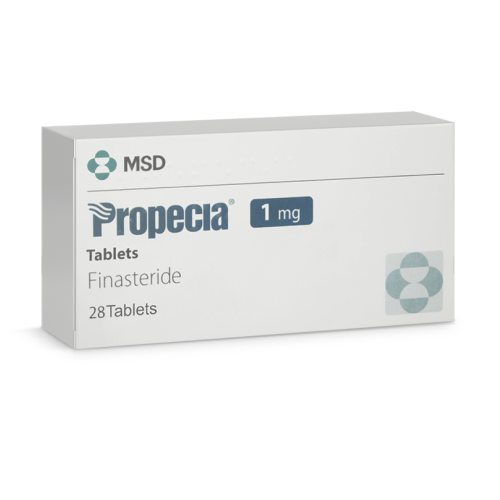
Propecia (finasteride) is a prescription medication used to treat male pattern hair loss by targeting the underlying cause: the effects of dihydrotestosterone (DHT) on scalp hair follicles. For patients in the United States, the single most important thing to know is that Propecia works only as long as you take it—and its benefits, risks, and practical realities are different from every other hair loss option you’ll encounter.
Is Propecia the Right Choice for Your Hair Loss?
Every patient with hair loss faces the same fork in the road: do you want to treat the problem at its hormonal root, or manage it from the outside in? Propecia, through its active ingredient finasteride, offers a fundamentally different approach than shampoos, supplements, or even topical minoxidil—because it changes what’s happening inside your scalp, not just on the surface.
For men experiencing male pattern hair loss (androgenetic alopecia), Propecia is the only oral treatment approved by the FDA to slow hair thinning and, in many cases, help regrow hair. It works—often subtly, sometimes dramatically—by blocking the conversion of testosterone to dihydrotestosterone (DHT), which is the molecule that signals hair follicles on the scalp to shrink and eventually stop producing visible hair.
Not all hair loss is the same. If your hair loss has a sudden onset, involves patchy bald spots, or is associated with scarring or redness, Propecia may not be the right choice—and could delay proper diagnosis of another condition.
Because Propecia is only effective in certain types of hair loss—and because its benefits are gradual and require ongoing use—the first, and often hardest, question is: is this truly the right tool for you? The answer depends on your diagnosis, your goals, your tolerance for trade-offs, and your willingness to commit to a long-term, prescription-based approach.
- If you’re seeking a non-prescription option, Propecia is not available over the counter anywhere in the United States.
- If you are concerned about systemic side effects or planning to father a child soon, alternatives may be safer or simpler.
- If your goal is dramatic regrowth in advanced baldness, expectations must be realistic: Propecia works best in early to moderate hair thinning.
Ultimately, Propecia is the right choice for men with early to moderate male pattern hair loss who want to address the underlying process—and are ready for a daily, lifelong commitment.
What Finasteride Actually Does to Your Hair Follicles
Finasteride’s impact isn’t felt immediately, and it’s not something you see in the mirror within days or weeks. Instead, it quietly alters the hormonal environment around your scalp, reducing DHT levels and allowing vulnerable hair follicles to recover from the shrinkage that causes visible thinning.
- Dihydrotestosterone (DHT):
- A potent form of testosterone that drives hair follicle miniaturization in genetically susceptible men.
Here’s what happens after you start taking Propecia:
- Within a week: Blood DHT levels drop by about 70%, but nothing changes on your scalp—yet.
- Months 1-3: Hair loss often slows, though some patients see a brief “shedding” phase as older hairs fall out to make way for regrowth.
- Months 3-6: Early signs of new growth or thickening become apparent for some, especially at the crown.
- 6-12 months: The majority of benefit is achieved by one year. Maintenance, rather than new regrowth, becomes the focus.
Two out of three men maintain or improve hair with Propecia over five years, according to long-term studies.
Unlike minoxidil, which works through an entirely different pathway and may provide a more immediate cosmetic improvement, finasteride’s benefit is slow and often subtle. Its power lies in prevention: keeping the hair you have, not just trying to regrow what’s been lost.
Finasteride changes the hormonal landscape that drives hair loss. Its effect is gradual, preventive, and most visible when treatment is started early.
Propecia in Real Life: How Patients Actually Experience It
In clinical trials, outcomes are measured in millimeters of hair thickness and counts per square centimeter. But in daily life, what matters is confidence, convenience, and the experience of living with a medication you take every day for years.
“In my practice, the men who do best with Propecia are those who understand that progress is measured in what doesn’t happen—the hair that doesn’t fall out, the slow fading of worry each time they look in the mirror. Their results are rarely dramatic, but they’re real, and over time, they add up.”
- Most patients tolerate Propecia well and forget they’re even taking it, save for a yearly prescription renewal.
- For a small but vocal minority, concerns about side effects—especially those affecting sexual function—can loom large, whether or not they actually experience them.
- Stopping Propecia leads to gradual return of hair loss; any gains are lost within 12 months if the medication is discontinued.
Missed doses rarely matter—stopping altogether does. If you miss a tablet, just take the next one as scheduled. But stopping for weeks or months will undo benefits and may trigger renewed shedding.
Every patient’s journey with Propecia is shaped not just by biology, but by expectations, patience, and the willingness to weigh risks against the steady, slow reward of not losing ground.
Which Side Effects Matter Most with Propecia—and When to Act
Side effects are the single biggest source of anxiety for men considering Propecia. The headlines focus on the worst-case scenario; the reality is more nuanced, and the numbers matter.
Sexual side effects—reduced libido, difficulty with erection, or reduced semen volume—affect about 1 to 2 out of every 100 men in clinical studies. Most cases are mild and reversible with discontinuation, but a small fraction of patients describe persistent symptoms after stopping the medication. This phenomenon, sometimes called “post-finasteride syndrome,” remains controversial and poorly understood in the medical community. The FDA currently requires a warning about potential persistence of sexual side effects but acknowledges the evidence is inconclusive.
Other possible adverse effects include breast tenderness or enlargement, allergic reactions, and (rarely) depression. Serious risks, such as high-grade prostate cancer, have been debated but do not appear significantly increased in standard practice according to current evidence (FDA).
| Side Effect | Frequency | When to Contact a Doctor |
|---|---|---|
| Reduced Libido | 1-2% | If persistent or distressing, or if affecting quality of life |
| Erectile Dysfunction | 1-2% | If persistent, severe, or accompanied by other symptoms |
| Reduced Semen Volume | 1-2% | If associated with pain, blood, or fertility concerns |
| Breast Tenderness/Enlargement | <1% | If noticeable, persistent, or associated with lumps |
| Allergic Reaction | Rare | Immediately, if swelling, rash, or difficulty breathing |
| Depression / Mood Changes | Uncommon | If new or worsening depression, suicidal thoughts |
For most patients, the risk of serious side effects is low, but the decision to start—and stay on—Propecia should always be made with a full understanding of these risks, however rare. What matters most is a willingness to speak up if symptoms appear, rather than pushing through in silence.
Propecia vs. the Rest: How Does It Stack Up Against Other Hair Loss Treatments?
| Medication/Option | Type | How It Works | Effectiveness (Evidence) | Onset of Benefit | Common Side Effects | Prescription Needed (U.S.) |
|---|---|---|---|---|---|---|
| Propecia (finasteride 1mg) | Oral Rx | Blocks DHT production | 66% maintain/improve hair at 5 years | 3-6 months | Sexual dysfunction, rare mood effects | Yes |
| Minoxidil (Rogaine) | Topical OTC | Increases blood flow to follicles | Up to 40% regrow some hair | 2-4 months | Scalp irritation, unwanted hair growth | No |
| Hair Transplant Surgery | Procedure | Moves hair follicles to balding areas | Permanent result if successful | Immediate (post-recovery) | Scarring, infection, shock loss | Consultation required |
| Supplements & Shampoos | OTC | Varied; most unproven | No robust evidence | Varies | Minimal (allergic reactions) | No |
| Dutasteride (off-label) | Oral Rx | Stronger DHT blocker | Limited data for hair loss | 3-6 months | Similar, more pronounced | Yes |
For most men, Propecia offers the strongest evidence of long-term benefit with the convenience of a daily pill—provided you’re eligible and comfortable with the trade-offs. Minoxidil is often used alongside Propecia for additive effects, but is less effective alone, especially in areas of advanced hair thinning. Hair transplants offer a surgical solution but require a stable donor area and are invasive, expensive, and not risk-free.
Propecia sets itself apart as the only FDA-approved oral therapy for male pattern hair loss in the U.S., balancing proven benefit against well-characterized but uncommon risks.
Getting Propecia in the United States: Access, Insurance, and Real-World Obstacles
In the United States, Propecia is strictly a prescription medication. You cannot walk into a pharmacy and buy it off the shelf or legally order it from overseas without a prescription. Most healthcare providers—primary care physicians and dermatologists—are familiar with Propecia, but some may be cautious in prescribing it, especially if you have atypical hair loss or a complex medical history.
- Insurance rarely covers Propecia for hair loss, considering it a “cosmetic” medication. Out-of-pocket cost typically ranges from $70 to $90 per month for the brand, while generics may be obtained for as little as $10 to $20 per month at discount pharmacies.
- Telemedicine platforms have made access easier. Many now offer evaluation, prescription, and mail-order pharmacy service in a single visit, provided you meet criteria for safe prescribing.
- Pharmacy substitution is common; unless you request the brand, you will almost always receive generic finasteride 1mg, which is clinically equivalent for hair loss.
Never attempt to import Propecia yourself. U.S. Customs routinely seizes unauthorized prescription drug shipments, and you risk receiving counterfeit medication.
The process is usually straightforward: consultation, prescription, pharmacy fill, daily tablet. But the pathway is regulated at every step, and insurance support is the exception, not the rule.
The Myths and Truths About Results: What to Expect, and When
“Will my hair actually come back?” “How soon will I know if it’s working?” These are the questions that haunt every new patient—and the answers are often more complicated than marketers or message boards suggest.
- Most patients notice a slowing or halting of hair loss within three to six months. Reversal of thinning—true visible regrowth—may take six to twelve months and is typically modest.
- The areas most likely to benefit are the crown and mid-scalp. The frontal hairline is less responsive, though some patients see improvement.
- Not everyone responds. Roughly 1 in 3 men see little to no benefit—usually those with advanced baldness or who start treatment later in the process.
Clinical trials show that after five years, about two-thirds of men maintain or increase hair count vs. progressive loss in untreated men.
Regrowth is not guaranteed, and the most dramatic transformations are rare. The real power of Propecia is in preservation: keeping the hair you have, and slowing the clock on a process that’s otherwise relentless.
Set your expectations around maintenance, not miracles. And remember: if you stop, any gains disappear within months.
When Not to Take Propecia: Absolute and Relative Contraindications
Absolute contraindications: Propecia must never be used by women, children, or anyone with a known allergy to finasteride. Women who are or may become pregnant should not even handle crushed or broken tablets, as finasteride can cause birth defects in a male fetus.
- Liver disease: Because finasteride is metabolized by the liver, caution is advised in patients with significant hepatic impairment. Dosing adjustment is not routinely required, but your doctor may monitor you more closely.
- Prior adverse reaction: Any previous serious side effect with Propecia or other 5-alpha reductase inhibitors is a reason to avoid further use.
- Unexplained hair loss: Sudden, patchy, or scarring hair loss should be evaluated thoroughly before starting Propecia, as effectiveness is limited to male pattern hair loss.
- Fertility concerns: While no definitive link has been established, men actively trying to conceive may wish to avoid finasteride, as effects on sperm parameters have been reported in rare cases.
Propecia is not for everyone. If you have any of these risk factors or are unsure about your diagnosis, a careful medical evaluation is essential before starting therapy.
Propecia FAQ—Questions No One Else Gets Quite Right
- Can women use Propecia for hair loss?
- No. Propecia is not approved for use in women and can cause birth defects if taken during pregnancy. Some doctors may use finasteride off-label for certain women, but this is uncommon and requires close supervision.
- Will I lose all my hair if I stop taking Propecia?
- You will not lose all your hair at once, but hair loss usually resumes and returns to pre-treatment levels within 9-12 months of stopping. Any gains are typically lost over time.
- Is generic finasteride just as good as Propecia?
- Yes. Generic finasteride 1mg tablets are FDA-approved for hair loss and are clinically equivalent to the brand-name Propecia for this purpose.
- Can I take Propecia and minoxidil together?
- Yes. Many patients use both for additive effect, as they work through different mechanisms. There is no known interaction between the two when used as directed.
- Does Propecia affect fertility?
- Rare cases of decreased sperm count and quality have been reported, but the overall risk appears low. If you are actively trying to conceive, discuss this with your doctor.
- How do I get Propecia in the United States?
- You need a prescription from a licensed healthcare provider. Some telemedicine platforms can provide a prescription after an online evaluation. Be wary of any sources offering Propecia without a prescription, as this is illegal and potentially unsafe.
- Can Propecia cause depression or mood changes?
- Mood changes and depression have been reported, but these are uncommon. If you notice new or worsening mood symptoms, notify your healthcare provider promptly.
Sources / References
- U.S. Food and Drug Administration (FDA)
- American Academy of Dermatology. Hair Loss: Overview and Treatment, 2023
- Mayo Clinic – Finasteride (Oral Route)
- ClinicalTrials.gov
- American Hair Loss Association. Treatments for Hair Loss, 2022
- PubMed
- Propecia (finasteride) Prescribing Information, Merck & Co.
- American Academy of Dermatology


