
No products in the cart.

- Home/
- Buy Priligy at Low Price in the United States Online
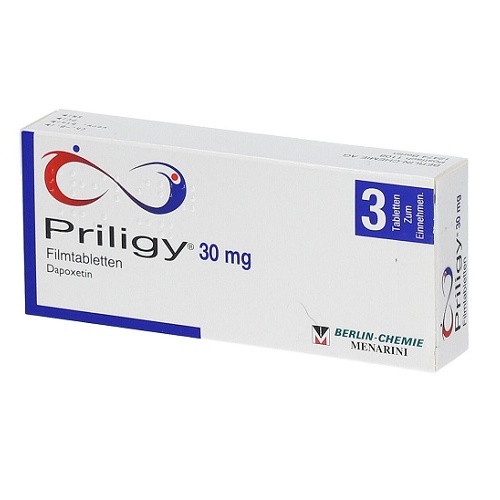
Priligy (dapoxetine) is a prescription medication taken as needed to help men with premature ejaculation gain control over their sexual experience. Unlike most other treatments, Priligy works quickly—often within an hour—and is designed for single-use, not daily dosing. The most important thing to know: Priligy is not a cure, but it can offer a meaningful difference for the right patient, when used with realistic expectations and clinical guidance.
A Moment That Changes Everything: Why Some Men Search for Priligy
The phone is face down on the nightstand. The room is quiet. You’re lying next to someone you care about—maybe for the first time, maybe the hundredth—but the same tight, anxious feeling creeps in. Sex feels like a race you’re destined to lose. It’s not about lust or love. It’s about time—and how quickly yours runs out.
For tens of millions of men in the United States, premature ejaculation isn’t a minor annoyance. It’s the wedge that drives shame, frustration, and distance into relationships. Many try to fight it in silence: home remedies, willpower, numbing creams, distraction techniques. Few talk about it, and even fewer realize that there’s a prescription option designed specifically for this moment—one that doesn’t demand daily pills or years of therapy, but answers an immediate need. That’s where Priligy, and its active ingredient dapoxetine, comes in.
- Frustration: “Why can’t I just last a normal amount of time?”
- Isolation: “Is this my fault? Is something wrong with me?”
- Desperation for a quick, reliable solution—not another lecture about anxiety or technique.
Priligy isn’t for every man, and it’s not a magic fix. But it’s often the first prescription specifically approved for premature ejaculation that patients hear about when they finally decide to search for a medical answer. This is the context—frustration, hope, skepticism—that shapes every decision about Priligy in real life.
How Priligy Changes the Game for Premature Ejaculation
Priligy is not just another antidepressant rebranded for sexual health. What sets it apart is the way it’s designed for single use—one pill before sex, not a daily commitment. The effect is fast: most men feel a difference within 1–3 hours. That’s fundamentally different from typical SSRIs (like paroxetine or sertraline) that require daily dosing for weeks before any benefit appears, and bring a host of other side effects along for the ride.
In the United States, Priligy is prescribed only for men with a true clinical diagnosis of premature ejaculation: ejaculation occurring within about one minute of penetration, on most occasions, for at least six months, causing distress or interpersonal difficulty. This isn’t about occasional bad nights. It’s about a persistent problem that’s resisted other approaches.
Stat: Clinical studies show that men taking dapoxetine can increase their time to ejaculation by 2–3 times compared to placebo, but the average is still in the range of 2–3 minutes—realistic, not movie-star territory.
- What does this mean for you? Priligy can give you more control, but the improvement is measured in minutes, not hours. For many men, that’s all it takes to restore confidence and intimacy.
- How does it work? Dapoxetine is a selective serotonin reuptake inhibitor (SSRI), but it’s rapidly absorbed and eliminated. This means fewer long-term side effects (like sexual dysfunction or mood changes) and less risk of withdrawal or dependence.
- What’s unique about the experience? You only take it when you need it. There’s no daily reminder of the problem—just a tool for the moments that matter.
The promise of Priligy is not permanent change—it’s a practical, short-term improvement. That’s both its biggest strength and its main limitation.
Taking Priligy: What Real Use Looks Like (and Feels Like)
Imagine a Friday night. No plans to take medication until you know sex is likely. You take a single Priligy tablet with water, 1–3 hours before you expect to need it. There’s no need for a daily pillbox or reminders. For many, this dosing flexibility is a relief—sex is spontaneous again, not scheduled around a drug regimen.
But what does it actually feel like to use Priligy? The answer is subtle: you probably won’t notice a surge of energy or any “high.” If it works for you, there’s simply more time before climax—enough to feel more in control. For some men, that’s the difference between anxiety and enjoyment.
Clinical Tip:
Priligy is best taken with a full glass of water, on an empty stomach or at least a light meal. Heavy meals can slow the effect. Alcohol increases risk of side effects—especially dizziness and fainting. Start cautiously if you drink.
Common mistakes include taking Priligy too late or too close to sex (less than an hour), skipping the dose on nights when sex is likely, or using it daily—none of which matches how the medication is designed to work.
How long does the effect last? For most, the window is 2–6 hours. It’s gone by the next day, with no lingering impact. That’s the appeal for men who want control in the moment, not a constant reminder of their diagnosis.
Who Does Best—and Who Doesn’t—on Priligy?
There is no universal responder. In practice, Priligy works best for men who:
- Have clear, lifelong premature ejaculation with significant distress
- Want a treatment that doesn’t require daily commitment
- Can plan for intercourse at least an hour in advance
- Aren’t seeking a “cure” but a practical improvement
On the other hand, men who struggle with severe anxiety, depression, or other sexual dysfunctions (like erectile dysfunction) often find Priligy less satisfying—or even counterproductive. For some, the improvement in time is too subtle, or side effects (such as nausea and lightheadedness) make it hard to use regularly.
- Primary Premature Ejaculation
- Condition present from the first sexual experiences. Priligy is more likely to be effective here.
- Secondary Premature Ejaculation
- Develops later in life, often tied to other health issues. Priligy may be less effective if a new cause is present.
This division matters. Priligy is not a one-size-fits-all medication. Its real advantage is for men who match its intended use: lifelong, not recently acquired, and not complicated by other medical or psychological problems.
The Doctor’s Perspective: The Choice Gap in Premature Ejaculation
“In my practice, the biggest surprise for patients isn’t that Priligy exists—it’s that it’s the only FDA-approved medication specifically for premature ejaculation as a single-use pill. Most other options are off-label antidepressants or behavioral techniques with variable results. The gap between what clinical trials promise and what happens in a real bedroom is wide. Priligy doesn’t double or triple time for everyone. But for a select group of men, it offers just enough improvement to restore confidence. I always tell patients: Set your expectations for a meaningful but moderate benefit, not a miracle.”
Physicians see the nuance. Priligy may sound like an obvious choice, but it’s only after a careful review of your history, other medications, and expectations that it becomes clear whether you’re likely to benefit—or whether another route is better.
Which Side Effects Matter Most with Priligy—and When to Act
The first dose of Priligy is rarely dramatic. The most common side effects are mild: nausea, headache, and dizziness. These usually fade after the first few doses or can be managed by taking the pill with a light, non-greasy meal and staying hydrated.
But no prescription is risk-free. For a small number of men, Priligy triggers severe dizziness or fainting—especially when combined with alcohol, dehydration, or certain other medications. Rarely, mood changes or suicidal thoughts occur, especially in men with a history of depression. These are signals not to ignore.
| Side Effect | How Common? | When to Contact a Doctor |
|---|---|---|
| Nausea | Up to 20% | If severe, persistent, or causing vomiting after each dose |
| Headache | 10–15% | If unresponsive to acetaminophen, or associated with vision changes |
| Dizziness | 8–15% | If fainting, near-fainting, or falls occur—stop Priligy and see a doctor |
| Sleepiness | 5–10% | If interfering with daily function |
| Mood Changes | <1% | If new depression, anxiety, or suicidal thoughts develop—seek help immediately |
| Allergic Reaction | Rare | Any swelling, rash, or difficulty breathing—call 911 or emergency care |
For most men, side effects fade or stabilize after a few doses. But if you feel faint or find yourself unable to stand, stop taking the drug and call your physician. Mixing Priligy with alcohol is a known risk factor for these problems. Don’t ignore the warning.
Warning:
Never drive or operate machinery within several hours of taking your first few doses of Priligy. Some patients underestimate the risk of sudden dizziness or blackouts, especially when getting up quickly.
When Not to Take Priligy: Absolute and Relative Contraindications
Absolute Contraindications
- History of heart failure, significant heart rhythm disturbances, or marked conduction disorders (eg, AV block, sick sinus syndrome) not stabilized by a pacemaker
- Significant liver impairment—Priligy is metabolized by the liver and unsafe in moderate or severe liver disease
- Concurrent use of MAO inhibitors, thioridazine, SSRIs, SNRIs, or certain antifungals/antibiotics (due to dangerous drug interactions)
- Known hypersensitivity to dapoxetine or any component of the tablet
- History of fainting or orthostatic hypotension
- Uncontrolled depression, bipolar disorder, schizophrenia, or other major psychiatric conditions
- Renal impairment—may require close monitoring or dose adjustment
- Regular use of substances that interact with liver enzymes (CYP3A4 inducers or inhibitors)
- Older age (over 65)—safety not well established and risk of falls is higher
Always review your full medication and health history with your prescriber before starting Priligy. The risk of a serious interaction or complication is real—but avoidable with careful screening.
Is Priligy Your Best Option? A Comparison with Other Treatments
Priligy is the only on-label prescription medication for premature ejaculation in the United States, but that doesn’t mean it’s your only option. Many men are prescribed other SSRIs, topical anesthetics, or behavioral approaches—sometimes in combination.
| Attribute | Priligy (Dapoxetine) | Paroxetine or Sertraline (SSRIs) | Topical Lidocaine/Prilocaine Creams |
|---|---|---|---|
| FDA Approval for PE | Not formally FDA-approved for PE, but used off-label; approved in other regions | No, off-label use only | No, off-label use only |
| How Taken | Oral tablet, as needed 1–3 hours before sex | Oral tablet, daily | Topical cream, applied to penis 10–20 min before sex |
| Onset/Duration | Works in 1–3 hours, lasts 2–6 hours | Works after 2–4 weeks, always in system | Works within 10–20 min, effect fades after washing |
| Effectiveness (Avg Increase) | 2–3x baseline time | 2–4x baseline time (in studies, but higher side effect risk) | Variable; up to 2x baseline time (risk of reduced sensation for partner) |
| Side Effects | Nausea, dizziness, headache; rare mood effects | Sexual dysfunction, weight gain, sleep/mood changes | Penile numbness, partner numbness, irritation |
| Contraindications | Heart/liver disease, certain medications | Drug interactions, psychiatric history | Broken skin, allergy to anesthetics |
| Prescription Needed? | Yes, in United States | Yes | Sometimes; some are OTC, others by prescription |
| Cost in United States | High (often not covered); varies by pharmacy | Low (generics widely available, often covered) | Low to moderate |
| Monitoring | Initial doctor screening; periodic check-ins | Regular assessment for side effects and mood | Minimal; watch for skin issues |
What does this mean in practice? Priligy targets men who want a fast, as-needed solution with a modest side effect burden. SSRIs like paroxetine can be more effective for some, but require daily use—and bring sexual side effects and mood risks. Topical creams are cheap and easy to try, but may cause numbness for partners. No option is perfect. The best choice often comes down to what matters most to you: speed, simplicity, discretion, side effect profile, or cost.
How to Get Priligy in the United States: Prescription, Price, and Pharmacy Realities
Priligy (dapoxetine) is not currently FDA-approved specifically for premature ejaculation in the United States, though it is approved in Europe and several other countries for this purpose. In the U.S., dapoxetine is considered an investigational or off-label prescription—meaning your doctor may prescribe it, but it will not be the first-line or insurance-covered option. Some compounding pharmacies offer dapoxetine, and select telemedicine platforms may facilitate access with appropriate physician consultation. Generic versions are not widely available through major U.S. chains.
Access Information:
- Prescription required: No legal over-the-counter option exists in the U.S.
- Pharmacy access: Major retail chains may not stock Priligy. Ask your prescriber about compounding or specialty pharmacy options.
- Insurance coverage: Most U.S. health plans do not cover Priligy for premature ejaculation.
- Pricing: Out-of-pocket costs are high, often $25–$50 per tablet, depending on source.
Be wary of online “pharmacies” offering dapoxetine without a prescription—these are often unregulated, potentially unsafe, and may not provide the drug as labeled. Only obtain Priligy through a licensed U.S. prescriber and reputable pharmacy. If cost is prohibitive, discuss alternative strategies with your healthcare provider.
FAQ: Answers to Actual Questions about Priligy in the United States
- Is Priligy FDA-approved in the United States?
- No. The FDA has not approved Priligy (dapoxetine) for premature ejaculation. It may be prescribed off-label by some doctors, but insurance coverage is rare.
- How fast does Priligy start working?
- Most men experience a benefit within 1–3 hours of taking a dose. Maximum effect is usually at 1–2 hours after swallowing the pill.
- Can I take Priligy every day?
- No. Priligy is designed as an on-demand medication. Taking it daily does not improve effectiveness and increases risk of side effects. The typical recommendation is not to exceed one dose in 24 hours.
- Can Priligy be combined with Viagra or other ED medications?
- Combination is sometimes used in men with both premature ejaculation and erectile dysfunction, but only under careful medical supervision due to increased risk of blood pressure drops and side effects.
- What if Priligy doesn’t work for me?
- Not every patient benefits. If you notice no improvement after several tries, or if side effects are intolerable, your doctor may suggest alternative medications or therapies.
- Are generic versions of dapoxetine available in the U.S.?
- Very limited. Most major chain pharmacies do not stock generic dapoxetine. Some compounding pharmacies may prepare it, but always verify sourcing and quality.
- Will my partner notice if I take Priligy?
- In most cases, no. Priligy does not cause noticeable changes in behavior or mood in the short term, though rare side effects (such as dizziness or nausea) may be apparent if severe.
- Is Priligy covered by insurance?
- Generally not. Most U.S. health plans consider this an off-label use and exclude coverage for premature ejaculation treatments.
Sources & References
- U.S. Food & Drug Administration (FDA)
- European Medicines Agency (EMA)
- Premature Ejaculation: Diagnosis and Management Guideline, American Urological Association, 2023
- Mayo Clinic
- PubMed (NIH/NLM)
- Priligy Official Manufacturer Site
- ClinicalTrials.gov
- Priligy (dapoxetine) Prescribing Information, EMA, 2022


